From Field to Bottle
Our Processes
Every Jose León expression begins with patiently matured agave and follows a deliberate sequence of selection, extraction, fermentation, filtration, distillation, resting, proofing, and immediate bottling.
- Process01
Harvesting Agave
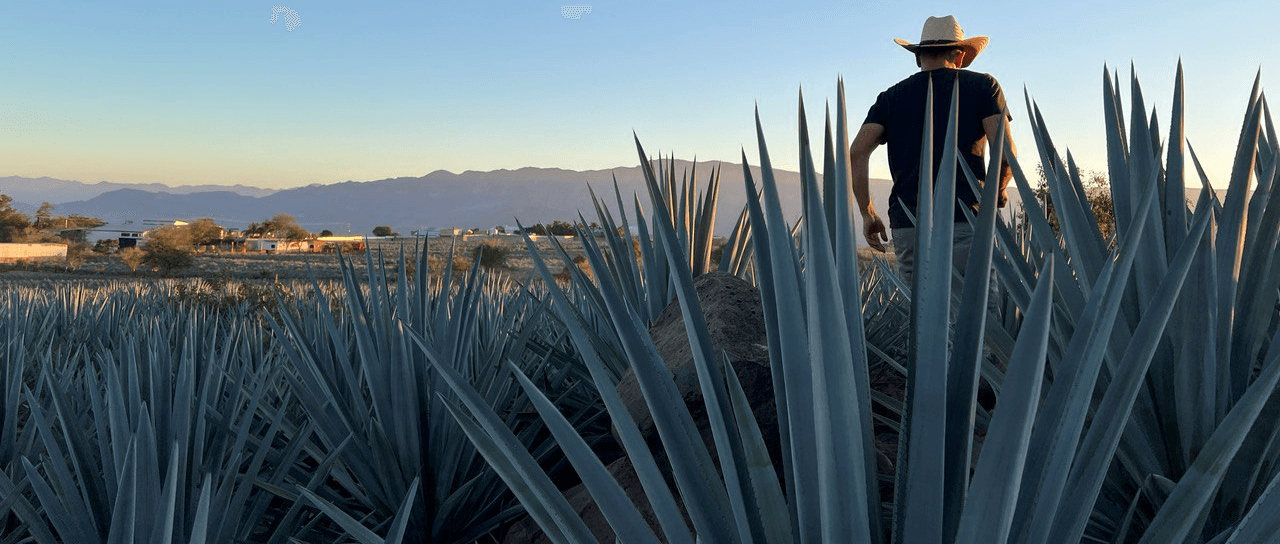
Our Blue Weber agave is allowed to mature for seven to ten years before skilled jimadores harvest each plant by hand at peak readiness. Only the best agave that has been carefully cultivated, cared for, and inspected for quality is selected. Agreements with farmers in the Tequila, Jalisco lowlands area ensure sustainable practices are honored and quality is a continuous cycle.
- Process02
Selecting the Best Agave Hearts
From carefully hand-tended, inspected, and harvested agave, only the finest mature agave hearts, or piñas, are selected to move forward. Protecting the quality, aroma, and flavor of every batch of Jose León is of the utmost importance to the family. The Jose León family is involved in every step, process, and procedure, from growth to bottling.
- Process03
The Jose León Agave Roasting Difference
Our carefully selected piñas are cut into sections, loaded in traditional stone hornos or autoclaves ovens and slowly steam-cooked (roasted) for seventy-two hours, followed by an precisely timed additional roasting cycle (tm) to develop deeper, richer notes of cooked agave white pepper, and rich caramelized sweetness—the distinctive flavor profile of Jose León Tequila.
- Process04
Agave Juice (Mosto) Extraction
After slow cooking, the softened agave piñas undergo two complementary extraction methods: traditional tahona crushing with a volcanic stone wheel and modern mechanical shredding. These processes break down the cooked agave fibers, releasing the sweet, sugar-rich agave juice that forms the foundation of our tequila. Known as mosto, this juice carries the cooked-agave character developed during cooking into the next stage: fermentation, where its sugars begin their transformation into alcohol. The shredded fibrous waste left over after extracting juice from the agave core is known as bagasse. Rather than going to waste, this organic fiber is donated to be repurposed in several ways: Biofuel, Compost, fertilizer, Bio packaging, paper, and building materials.
- Process05
Fermentation
After extraction, the agave-rich mosto is transferred to fermentation vats for three to four days, where our proprietary yeast converts the natural fermentable sugars released through roasting and extraction into alcohol. Temperature, timing, yeast activity, and sugar conversion are carefully monitored to maintain consistency and protect the roasted-agave character created in the hornos.
What happens inside the vats?
- Yeast consumes the fermentable sugars — Producing alcohol and carbon dioxide, which causes bubbling.
- Aromatic compounds develop — Helping shape the eventual tequila’s flavor.
- Temperature, time, acidity, and yeast strain — All influence the fermentation process.
During this transformation, fermentation develops the aromatic compounds and flavor-building elements that give Jose León Tequila its depth, body, and complexity, supporting notes of cooked agave, pepper, fruit, citrus, and gentle florals. The resulting liquid is called fermented mosto, or mosto fermentado. You may also hear mosto muerto, meaning “dead must,” for the liquid after fermentation is complete and before distillation. It is not yet finished tequila.
- Process06
Filtration
Moving the fermented agave liquid from the fermentation tank to the distillation still requires careful handling of our delicate liquid, called mosto muerto (dead wash), because it contains suspended yeast cells, dead bacterial cells, and certain amounts of agave fiber (bagazo). Distilling these solids directly can cause scorching against the heating elements of the still, ruining the batch flavor. Because it often contains fibrous residues, yeast sediment, and organic particulates, using graded strainers with progressively finer mesh sizes is essential to ensure a clean final flavor.
- Step 1 — Roughly 10 to 20 mesh (1.0 mm–2.0 mm openings).
- Step 2 — 40 to 60 mesh (0.25 mm–0.4 mm openings).
- Step 3 — 100+ mesh or industrial cheesecloth/inline bag filters.
- Process07
Copper Pot Distillation
The fermented mosto is distilled to concentrate the alcohol and refine its aromatic profile. The first distillation produces a spirit known as ordinario. It is a cloudy spirit that moves to round two. The second distillation process further refines the spirit, with carefully controlled separation of the heads, heart, and tails. The selected heart forms the foundation of the finished tequila while removing unwanted sulfur compounds. Copper primarily cleans and refines the spirit while retaining more flavorful congeners—giving tequila fuller body, richer agave character, and greater complexity while carrying forward its distinctive agave character.
- Process08
First Resting
After double distillation in copper pot stills, our tequila is removed and the copper stills are cleaned. The distilled tequila is then returned to rest for two weeks, further softening it and allowing volatile compounds to settle; those compounds are removed. The Jose León tequila then passes through a number of filtration screen sizes to remove particles and coarse impurities.
- Process09
Proofing
The tequila is diluted with deionized water to bottling strength at 40% ABV, then rests again to stabilize. It passes through a fine screen to remove smaller particles before being transferred to a stainless steel storage tank.
- Process10
Freeze Filtering & Bottling
The spirit is chilled below freezing, usually around 26°F, for a few hours and then passed through depth filters for lasting clarity. It is then bottled or placed into American oak barrels immediately after filtration to preserve the intended flavors and aromas. The brief cold filtering avoids using harsh filters such as charcoal, paper, and fabric filters that can strip flavors and aromas.
- Process11
Reposado Resting
The agave spirit is aged from nine to eleven months in American oak, one month shy of Añejo classification. We use 99% Quercus alba, an American white oak and the premier wood species used to craft barrels for aging. The oak develops warm notes of roasted agave, caramel, toasted wood, subtle citrus and baking spice. Gentle oxidation softens the spirit, creating a richer golden color and a remarkably long, smooth finish. Jose León Reposado tastes gentle and balanced while still containing the full ABV. Once the tequila is removed from the barrel, we use a gas spectrometer to ensure the quality, flavor and aroma you have come to expect.
- Process12
Añejo Aging
Jose León Añejo matures for up to 22 months in carefully selected American oak barrels—nearly twice the minimum aging required for an Añejo. We use 99% Quercus alba, an American white oak and the premier wood species used to craft barrels for aging. Extended barrel maturation develops rich layers of caramel, toasted oak, light chocolate and subtle dried fruit while preserving the tequila’s distinctive roasted-agave character. The result is a beautifully balanced Añejo with a deep amber color, silky mouthfeel and exceptionally long, warm finish. Once the tequila is removed from the barrel, we use a gas spectrometer to ensure the quality, flavor and aroma you have come to expect.